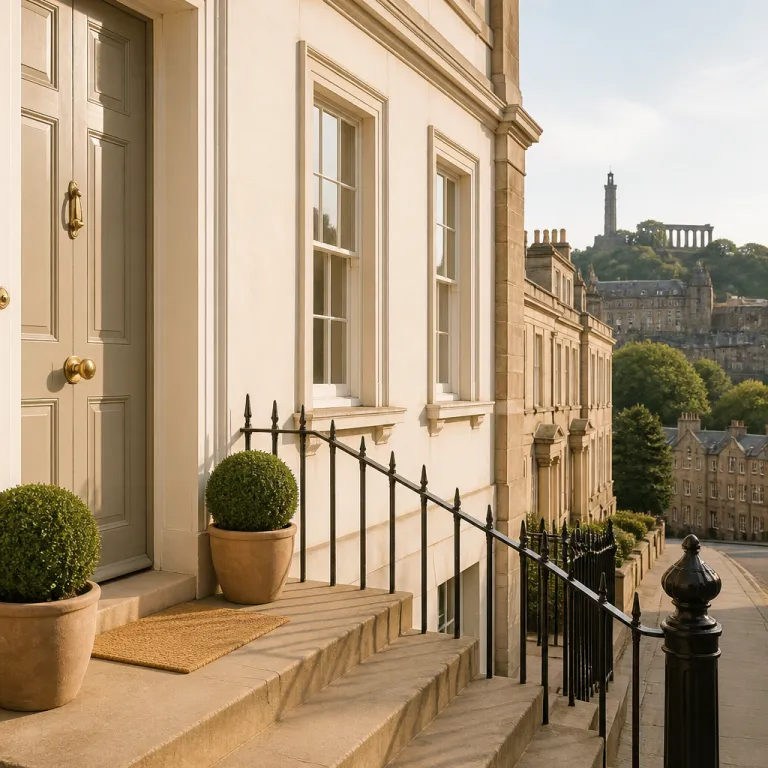
Why Edinburgh New Town is ideal for cultured city stays
Edinburgh New Town attractions sit at the heart of a graceful city centre that feels purpose built for slow, cultured stays. This part of Edinburgh in Scotland was laid out as a planned town with broad street vistas, elegant squares and refined Georgian architecture that still shapes every view. When you book a hotel here you place yourself between the Old Town skyline and many of the most sophisticated things to see, taste and explore in central Edinburgh.
The New Town forms one half of the UNESCO World Heritage pairing that links the medieval Old Town with the later Georgian town, giving you two distinct urban characters within easy walking distance. From almost any street address in this district you can stroll to major national institutions, landscaped street gardens and landmark monument viewpoints without needing a taxi. For travellers who want to visit Edinburgh for art, history and food rather than nightlife alone, this compact city centre base is usually the best choice.
Staying among the main Edinburgh New Town attractions also simplifies your daily planning and saves time. You can walk from your townhouse-style hotel on George Street to the Scottish National Gallery in under ten minutes, then continue to the Scott Monument or Calton Hill without feeling rushed. That freedom to explore on foot means you can return to your room between visits, change for dinner and still enjoy the city at a relaxed Scottish pace; one recent guest described it as “living in a film set, but with everything five minutes away”.
Princes Street, gardens and the great New Town axis
Princes Street is the dramatic southern edge of the New Town, a street where every gap between buildings frames the Old Town and Edinburgh Castle on its volcanic rock. On one side you have shops and hotels facing the city, while on the other the long ribbon of Princes Street Gardens drops away, creating one of the most memorable urban park views in Scotland. Many travellers regard this axis between the gardens and the street as the best first walk after check in because it instantly orients you within the city centre.
These street gardens were once the Nor Loch, a defensive lake below the Old Town, and their transformation into lawns, trees and flower beds is central to the story of Edinburgh’s Georgian planning. Today they link several key Edinburgh New Town attractions, from the Scott Monument near Waverley station and the St Andrew Square tram stop to the National Gallery complex at the Mound. As you visit each site you move between layers of Scottish history, from romantic literature to fine art and civic landscaping, without ever leaving this central green corridor.
For hotel guests the practical advantage is clear because Princes Street acts as a spine for transport and sightseeing. Trams and buses along the street connect you quickly to the airport and to wider Lothian destinations, while paths through the gardens lead up towards the Old Town and down towards the New Town grid. If you choose a room with a view here you can watch the light change over the castle and the monument skyline, then step outside and explore those same landmarks within minutes; photographs taken from this stretch often become the defining image of a first visit.
Art and culture: Scottish National Gallery and portrait collections
For many cultured visitors the greatest Edinburgh New Town attractions are its art museums, which sit almost on your doorstep when you stay nearby. The Scottish National Gallery stands at the foot of the Mound beside Princes Street Gardens and houses extensive art collections from various periods. This Scottish national institution is free to enter, making it easy to drop in for an hour between other things on your city itinerary; according to National Galleries of Scotland visitor statistics for 2022–23, it welcomes around 1.2 million people each year (figure checked 2024).
Just a short walk into the grid of the New Town brings you to the Scottish National Portrait Gallery on Queen Street, another major national gallery that focuses on people rather than landscapes or religious scenes. Inside this portrait collection you will find paintings, photographs and sculptures that trace how the city and Scotland have been shaped by monarchs, writers, scientists and campaigners. Together the National Gallery and the Portrait Gallery form a cultural triangle with the nearby Royal Scottish Academy that rewards repeat visits during a longer stay.
Hotel guests often appreciate how these galleries structure their time in Edinburgh because they offer clear morning or afternoon blocks. You might visit the Scottish National Gallery early, pause for coffee on George Street, then continue to the portrait displays before returning to your room to rest. With late opening on some days and audio guides available, these Edinburgh New Town attractions adapt well to different travel styles, whether you are a first time visitor or returning to explore specific artists in more depth; image captions and wall texts are regularly updated, so repeat visits often reveal new details.
Georgian streets, Charlotte Square and the Georgian House
Move a little further from Princes Street and you enter the calm geometry of Edinburgh’s Georgian planning, where long terraces and crescents define the townscape. George Street runs parallel to Princes Street and is often considered the best address for refined hotels, restaurants and bars in the New Town. From here you can explore side streets that reveal how the Edinburgh grid was designed to balance grand vistas with intimate residential lanes.
At the western end of George Street lies Charlotte Square, widely regarded as the finest Georgian square in the city and a highlight among Edinburgh New Town attractions. The square is framed by harmonious façades that showcase Georgian architecture at its most confident, with balanced proportions, classical doorways and elegant ironwork. On the north side you will find the Georgian House, a meticulously restored property that allows you to step inside an eighteenth century Edinburgh interior and understand how affluent residents once lived.
Visiting the Georgian House is particularly rewarding if you are choosing a hotel in this part of the city centre because it sharpens your eye for architectural detail. After a guided visit you will notice fanlights, stonework and staircases in your own temporary house that echo the same design language. Many travellers find that staying near Charlotte Square and George Street turns their daily walk to breakfast or dinner into a quiet lesson in urban history, adding depth to their time in this Scottish capital; even short strolls to nearby restaurants can feel like walking through an open-air museum.
Monuments and viewpoints: Scott Monument, Calton Hill and Nelson Monument
Some of the most distinctive Edinburgh New Town attractions are its vertical landmarks, which punctuate the skyline and offer far reaching views over the city. The Scott Monument rises from the edge of Princes Street Gardens as a dark Gothic spire dedicated to Sir Walter Scott, and its narrow staircases reward climbers with close up views of the Old Town and the wider Lothian landscape. Official visitor information from City of Edinburgh Museums notes that the height of the Scott Monument is about 61 metres, which makes it one of the tallest writer monuments in the world (figure confirmed 2024).
To the east of the New Town grid, Calton Hill forms another essential stop for anyone who wants to explore the city centre on foot. This low hill is only about 103 metres high yet it delivers panoramic views that take in Edinburgh Castle, the Firth of Forth and the ordered lines of the New Town streets below. It is accessible by foot from Princes Street; follow signs, and you will soon reach the summit where the Nelson Monument and other structures create a distinctive silhouette against the Scottish sky.
For hotel guests these monuments are more than simple viewpoints because they help structure your sense of place within the town. A morning climb of the Scott Monument followed by an evening walk up Calton Hill allows you to see how light and weather transform the same cityscape over time. Many visitors choose to visit Edinburgh again after such experiences, drawn back by the memory of standing above the city and tracing every street, square and garden they explored during their stay; photographs taken from the Nelson Monument platforms often become lasting souvenirs.
Planning your stay: where to book and how to use your time
Choosing the right hotel around the Edinburgh New Town attractions can shape how you experience the city as a whole. Properties along Princes Street and George Street put you closest to transport, shopping and the main national gallery buildings, which suits travellers who want everything within a short walk. Those who prefer quieter nights often look towards streets near Charlotte Square or Queen Street, where the feel is more residential yet still firmly within the city centre.
When you plan your visit Edinburgh itinerary it helps to cluster nearby sights so you minimise backtracking and make the best use of your time. One effective pattern is to spend a morning in the Scottish National Gallery and Princes Street Gardens, an afternoon exploring the Scott Monument and nearby street gardens, then an evening on Calton Hill watching the light fade over the town. Another day could focus on the Georgian House at Charlotte Square, the portrait gallery on Queen Street and a leisurely dinner on George Street, allowing you to explore both the cultural and culinary sides of this Scottish city; walking times between these points are usually ten to fifteen minutes.
Practical details matter as well, especially if you are balancing work and leisure during your stay in Edinburgh. Wear comfortable walking shoes because the town centre rewards those who explore on foot, and check opening hours in advance for each monument or gallery you plan to visit. With interactive digital guides, maps and audio tours now widely available across the main Edinburgh New Town attractions, you can tailor each day to your interests while still leaving space for unplanned moments in this layered Georgian town; many visitors now download official apps or PDF maps before arrival (recommendation updated 2024).
Key figures about Edinburgh New Town attractions
- The Scottish National Gallery welcomes around 1.2 million visitors each year, underlining its status as one of the best known cultural attractions in the city centre (estimate based on National Galleries of Scotland visitor statistics for 2022–23, accessed 2024).
- The Scott Monument stands roughly 61 metres high, making it one of the tallest monuments dedicated to a writer anywhere in the world and a defining feature of the Princes Street skyline (height confirmed by City of Edinburgh Museums data, checked 2024).
- Calton Hill rises to about 103 metres above sea level, yet its central position means it offers some of the most comprehensive views across Edinburgh and the wider Lothian region (measurement drawn from City of Edinburgh Council mapping resources, consulted 2024).
- Edinburgh’s compact layout allows many visitors to explore several major New Town attractions in a single day on foot, reducing the need for taxis or public transport within the core area; typical walking times between Princes Street, George Street and Queen Street are under fifteen minutes.
FAQ about staying near Edinburgh New Town attractions
What are typical opening hours for the main galleries in New Town Edinburgh?
The Scottish National Gallery is usually open daily from 10.00 to 17.00, with some late openings on selected days for special events. The Scottish National Portrait Gallery generally follows similar daytime hours, though major exhibitions may have extended times. It is wise to check the latest details shortly before your visit Edinburgh trip because seasonal adjustments can occur and hours were last widely updated in 2023.
Is there an entrance fee for the Scott Monument and how long does a visit take?
Yes, a small fee applies for climbing the Scott Monument, while access to the surrounding Princes Street Gardens remains free. Recent ticket prices have typically been under £10 per adult, with concessions available, but you should confirm the current rate close to your travel dates. Most visitors spend between 30 and 60 minutes here, including the climb and time at the viewing platforms, so if you are planning a busy day of Edinburgh New Town attractions allow a full hour.
How do I reach Calton Hill from a hotel in the New Town?
Calton Hill is accessible by foot from Princes Street; follow signs from the east end near the Balmoral Hotel and you will reach the path in a few minutes. The walk up is short but fairly steep, so comfortable shoes are recommended, especially in wet Scottish weather. Many guests time their visit for late afternoon so they can watch the sunset over the town and the distant Lothian hills.
Which area of the New Town is best for a first stay in Edinburgh?
For a first visit many travellers choose hotels between Princes Street, George Street and Charlotte Square because this triangle keeps you close to the main Edinburgh New Town attractions. From here you can walk easily to the national gallery buildings, the Scott Monument, Calton Hill and the Georgian House without relying on buses. Guests who prefer a quieter atmosphere often look slightly north towards Queen Street, where the streets feel more residential but remain within easy reach of the city centre.
Can I explore both the Old Town and New Town on foot during a short stay?
Yes, the distance between the Old Town and the New Town is short enough that most visitors comfortably walk between them several times a day. From Princes Street Gardens you can reach the Royal Mile and Edinburgh Castle in around fifteen minutes, then return to the Georgian streets for dinner or evening drinks. This walkable layout is one of the main reasons why staying near the Edinburgh New Town attractions works so well for cultured city breaks.
Trusted references for further planning
For detailed, current information on exhibitions, opening hours and events at the Scottish National Gallery and the Scottish National Portrait Gallery, consult National Galleries of Scotland visitor updates, which are reviewed regularly. Practical details about the Scott Monument and other city heritage sites are available from City of Edinburgh Museums and Galleries information pages, which provide the latest figures and access notes. For broader planning across transport, maps and seasonal festivals in the city and wider Lothian region, VisitScotland offers comprehensive visitor guidance that is refreshed throughout the year.
