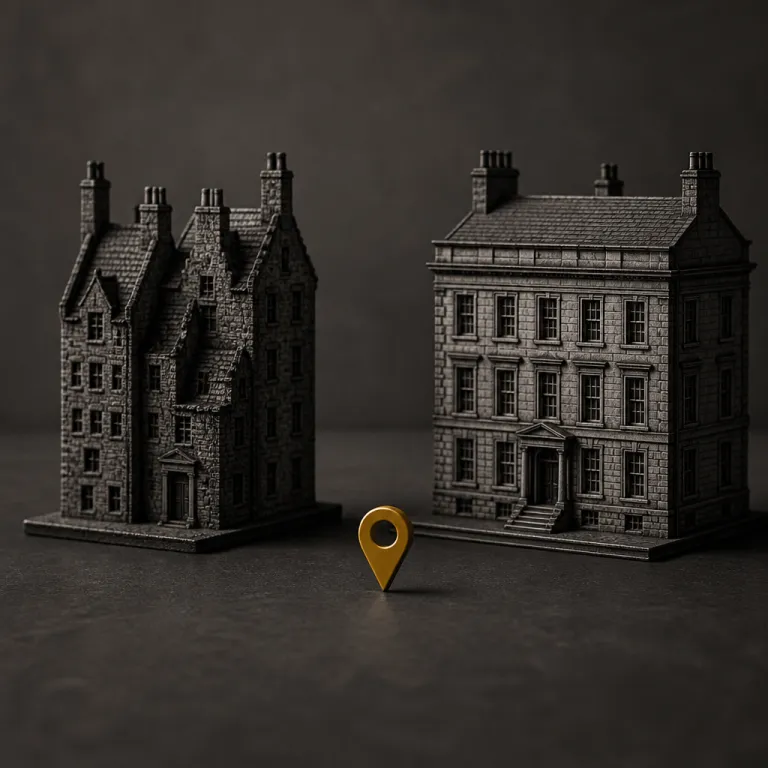
Edinburgh Old Town vs New Town for first‑time visitors
Edinburgh Old Town vs New Town is the central question for many travellers. When you arrive in the Scottish capital, you immediately feel the contrast between the medieval quarter and the Georgian district, and that contrast shapes where you will want to book your hotel. Your choice of area will define your daily walk along each street, your view of the castle, and even how you experience Scottish light at different times of day.
The Old Town of Edinburgh is the original settlement the city grew from, a steep ridge crowned by Edinburgh Castle and threaded by the Royal Mile. This historic district is dense, atmospheric, and layered with history, with buildings that were first recorded in the medieval period and then rebuilt or extended in almost every later century. Across the valley, the New Town spreads in elegant grids, where wide avenues such as Princes Street and George Street offer a very different sense of space, light, and calm compared with the older streets.
For a first stay, many visitors choose a hotel in the Old Town to be close to the Royal Mile and the castle. Others prefer a stay in the New Town because it offers quieter places to sleep, refined Georgian buildings, and quick access to the city centre shops. Thinking clearly about your priorities for this stay in Scotland will help you decide which of the two central districts suits you best, and in practice you will probably spend time walking through both areas each day.
Atmosphere and architecture: medieval drama or Georgian order
Walking through the Old Town of Edinburgh feels like stepping into a vertical city carved from stone. The area is a maze of closes, wynds, and stairways, where each narrow street suddenly opens onto a hidden courtyard or a view of the castle. Many of these buildings were built in the late medieval period and then raised higher in each following century, creating some of the earliest high rise structures in Europe and giving the streets their dramatic, almost theatrical character.
Across the valley, the New Town was built as a planned expansion of Edinburgh, designed to relieve overcrowding and express a new confidence in Scottish urban life. Its streets run in ordered grids, with George Street at the centre, Princes Street to the south, and Queen Street to the north, and the architecture follows neoclassical principles that emphasise balance and proportion. This is where you see the work of architects such as Robert Adam, whose designs around Charlotte Square helped define the character of the area and still influence which buildings are considered the best addresses in the city.
When you compare Edinburgh Old Town vs New Town, you are really comparing two philosophies of town building. The Old Town grew organically around the Royal Mile and Edinburgh Castle, while the New Town was laid out with careful urban planning and a clear sense of Edinburgh’s role as a European capital. Both districts now form part of a single UNESCO World Heritage Site, which means that every stay in either quarter places you inside a protected urban landscape of international importance and visible layers of Scottish history.
Location, transport, and access to the wider city
From a practical point of view, both the Old Town and the New Town sit at the heart of the city centre. Waverley Station lies in the valley between them, so whichever side you choose, your hotel will usually be within a short walk of the main rail lines that connect Edinburgh with the rest of Scotland. Trams and buses run along Princes Street and nearby streets every few minutes during the day, giving you fast access to areas such as Leith, the waterfront district that has become one of the most interesting places to stay beyond the historic core.
In the Old Town, the steep gradients and cobbled street surfaces can make luggage handling and late night walks more demanding. However, you are rewarded with immediate access to the Royal Mile, Edinburgh Castle, and many of the city’s most important heritage buildings, which saves time if your stay is focused on history and culture. In the New Town, the terrain is gentler, pavements are wider, and the grid layout makes it easier to navigate Edinburgh, especially if this is your first time in a Scottish city and you like to explore on foot without constantly checking a map.
Both central districts connect easily with outlying attractions. From the New Town, it is a short walk of around ten minutes to Calton Hill, where you can look back over the Old Town skyline and see how the medieval town and the Georgian town interlock. From the Old Town, you can descend towards the Grassmarket and then climb again to viewpoints that frame the New Town streets and squares, helping you understand why the combined Edinburgh cityscape is considered one of the best preserved urban ensembles in Europe.
What each side offers for history, culture, and views
For travellers who care deeply about history, the Old Town is an obvious magnet. Here the Royal Mile runs from Edinburgh Castle down to the Palace of Holyroodhouse, and every side street seems to hold a story from a different century of Scottish life. Museums, churches, and historic houses cluster in this area, making it easy to fill your time with visits that bring the long history of Edinburgh to life, and many visitors say that a single afternoon here changes how they picture Scotland.
The New Town tells a different chapter of Edinburgh’s heritage, one that reflects Enlightenment thinking, commercial ambition, and a new confidence in the city as a modern capital. Its broad streets and squares, including Charlotte Square and the terraces around it, were designed to attract the best families and businesses of the time, and many of the buildings still display refined interiors that speak of that era. Monuments to figures such as Walter Scott on Princes Street and other memorials on Calton Hill underline how the city used its new town to project Scottish culture to the wider world.
When you weigh Edinburgh Old Town vs New Town for views, both sides offer memorable perspectives. From the castle you look down over the New Town grid and out towards the Firth of Forth and Leith, while from Calton Hill you see the Old Town ridge rising with its dense cluster of roofs and spires. This interplay between the two historic quarters is one reason the combined urban area is recognised as a UNESCO World Heritage Site, and it means that whichever place you choose as your main base, you are always only a short walk from another unforgettable panorama.
Choosing your hotel: ambience, budget, and practical comfort
When you start comparing specific places to stay, the Old Town tends to offer hotels in older buildings with thick stone walls and irregular layouts. Rooms can be compact because the original town fabric was dense, but many travellers feel that this character makes their stay in Edinburgh more memorable. If you want to wake up within a few minutes’ walk of the Royal Mile or Edinburgh Castle, this is often the best area to focus on, especially if you value atmosphere over floor space.
In the New Town, hotels are more likely to occupy Georgian terraces that were built with generous ceiling heights and large sash windows. Properties along George Street, Charlotte Square, and the streets parallel to Princes Street often combine period features with modern comforts, which can be ideal if you want a calm place to stay after a long day in the busy city centre. Because the New Town was planned in a later century, its buildings usually allow for better sound insulation, lifts, and more regular room shapes, which some guests value more than being directly beside a medieval heritage site.
Price patterns vary with season and demand, but as a rule, the most central streets in both areas command higher rates. If you are willing to walk ten to fifteen minutes from the Royal Mile or George Street, you can often find a hotel that offers better value while still keeping you close to the main parts of Edinburgh visitors want to explore. Some travellers even choose to stay in Leith for part of their time, then move to a hotel in the city centre for a final night, combining waterfront calm with the intensity of the historic town and giving their trip two very different moods.
Who should stay where: matching neighbourhoods to travel styles
Different types of travellers will find that one side of the city suits them better. If your main reason to visit Edinburgh is to immerse yourself in Scottish history, walk the Royal Mile at quiet times, and feel the weight of centuries in every street, then the Old Town is likely to be your ideal place to stay. Families with younger children or travellers with mobility concerns may still choose an Old Town hotel, but they should pay close attention to how steep the immediate area is and how many steps separate the entrance from the main road.
Guests who prioritise shopping, dining, and evening drinks often lean towards the New Town. George Street is lined with restaurants and bars, while Princes Street offers department stores and views back to the castle, and the surrounding streets hold many of the best contemporary venues in Edinburgh. For business travellers, the New Town can also be a more efficient base, because its grid layout and proximity to transport links reduce travel time between meetings in different parts of the city.
Some visitors like to split their stay between the two historic districts to experience both sides of the UNESCO World Heritage landscape. They might begin with two nights in the Old Town to focus on the castle, the Royal Mile, and the densest cluster of heritage buildings, then move to a New Town hotel near Charlotte Square for a final night of calmer streets and refined Georgian architecture. This approach allows you to feel how Edinburgh evolved from a medieval stronghold into a planned Enlightenment city, and it turns the question of Edinburgh Old Town vs New Town into a both rather than an either or choice.
Key figures that shape the Old Town and New Town story
- Old Town development is often traced back to the medieval era, and this long timeline explains why the town fabric feels layered and irregular compared with the ordered New Town grid (source: Historic Environment Scotland and City of Edinburgh Council heritage summaries).
- The New Town was constructed in several main phases across the late eighteenth and early nineteenth centuries, which allowed architects such as Robert Adam to refine a coherent neoclassical vision across multiple streets and squares (source: City of Edinburgh Council planning and conservation documents).
- Both the Old Town and the New Town form a single UNESCO World Heritage Site, recognising the combined heritage value of medieval and Georgian urban planning in one city centre (source: UNESCO World Heritage Centre listing for the Old and New Towns of Edinburgh).
- Urban development in the New Town was driven by goals to accommodate a growing population and improve living conditions, which contrasts with the organic growth of the Old Town streets (source: context and goals of urban growth, City of Edinburgh Council background papers).
- Preservation efforts in both areas have increased tourism and supported the integration of modern amenities into historic buildings, helping hotels operate within protected heritage areas (source: tourism and preservation impacts, Historic Environment Scotland and local tourism studies).
FAQ: planning your stay between Old Town and New Town
What is the main difference between Old Town and New Town?
What is the main difference between Old Town and New Town? Old Town is medieval with narrow streets; New Town is Georgian with wide streets. This contrast in street pattern and building style is at the heart of the Edinburgh Old Town vs New Town decision for many visitors, and it shapes everything from hotel character to evening walks.
Which area is better for tourists who love history?
Which area is better for tourists? Both offer unique experiences; Old Town for history, New Town for architecture. If your priority is to be close to the Royal Mile, Edinburgh Castle, and the densest cluster of heritage buildings, then the Old Town is usually the best place to stay, while the New Town lets you sleep inside the grand Georgian terraces that represent a different phase of Edinburgh’s heritage.
Is the New Town also part of the UNESCO World Heritage Site?
Yes, the New Town is fully included in the UNESCO heritage designation that covers the Old and New Towns of Edinburgh. This means that when you stay in the New Town, especially around George Street, Charlotte Square, or near Calton Hill, you are still within the protected historic landscape. The status helps ensure that new developments respect the character of the existing buildings and streets.
Are there guided tours that cover both towns in one visit?
Are there guided tours available? Yes, guided tours are available for both areas. Many walking tours now start in the Old Town near the Royal Mile, cross the valley, and then continue through the New Town streets, giving you a clear sense of how the two historic quarters relate to each other and how the skyline changes as you move between them.
How easy is it to reach Leith and other districts from the historic centre?
From either the Old Town or the New Town, it is straightforward to reach Leith and other districts by bus, tram, or taxi. Services run frequently along Princes Street and nearby routes, so you can stay in the historic centre and still explore the waterfront restaurants and cultural venues in Leith. Many travellers enjoy combining a heritage focused day in the city centre with an evening meal by the water to experience a different side of the city.
Sources and further reading
Historic Environment Scotland ; City of Edinburgh Council planning and heritage documents ; UNESCO World Heritage Centre records for the Old and New Towns of Edinburgh.
